Curriculum
Our curriculum is rigorously reviewed to continue providing current, relevant teaching and experience to our residents while affording them the flexibility they need in their training. Residents rotate through all subspecialties of radiology and complete their core requirements in the first three years of radiology training. We recognize that the timing of the American Board of Radiology Core and Certifying examinations is changing, and we are well prepared to accommodate that change in our curriculum gradually over the next few years.
Clinical Rotations
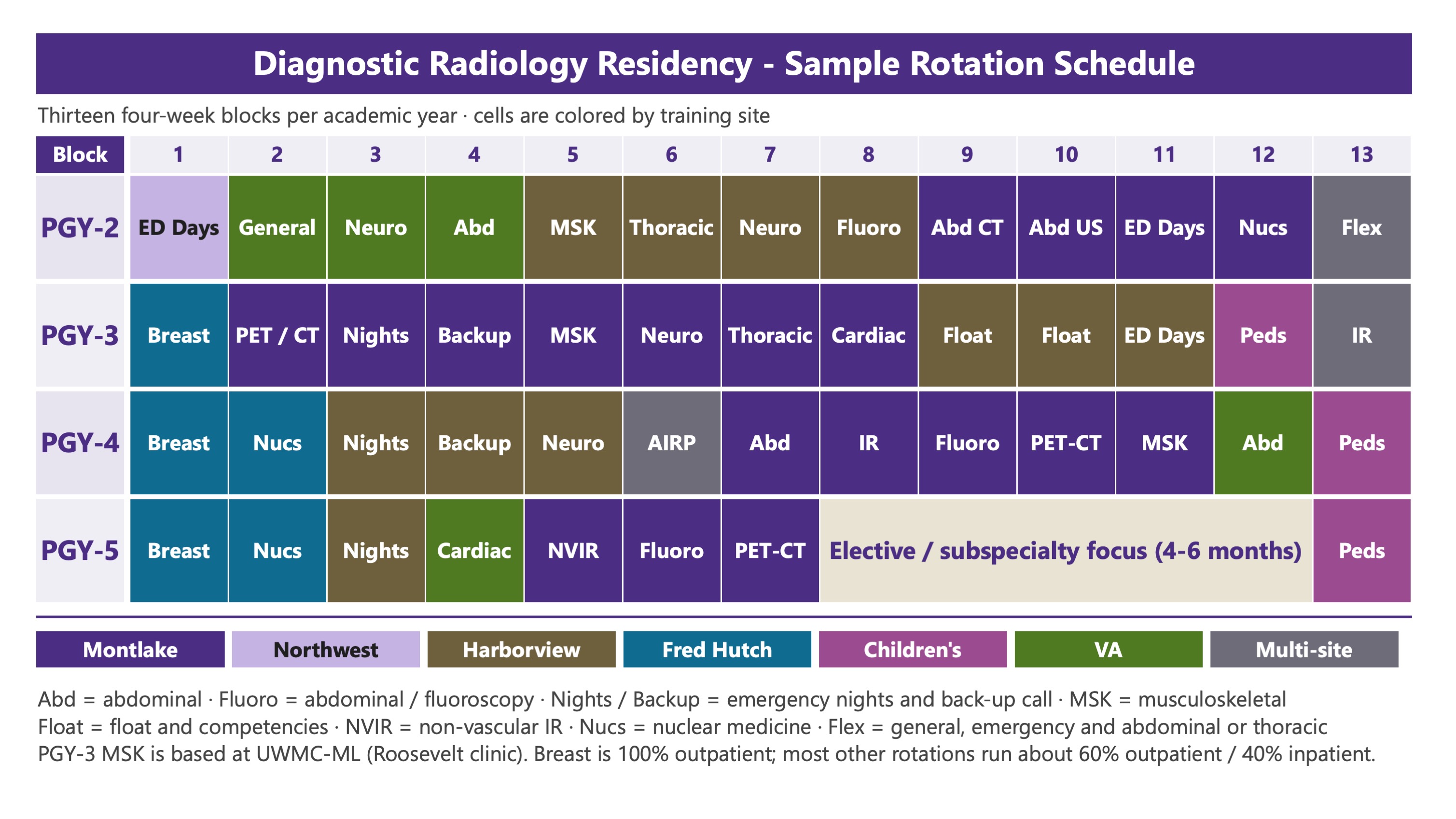
Residents in the PGY-2 to PGY-4 years have a standardized curriculum, with a few electives available each year. The rotation structure described below reflects the current curriculum; schedules for incoming trainees will differ as we adapt to the revised timing of the American Board of Radiology examinations, and concentrated subspecialty focus areas may be supported on a case-by-case basis.
Standard rotations at multiple sites include:
- Cardiothoracic radiology including plain film and CT at the University of Washington Medical Center – Montlake (UWMC-ML) and Harborview Medical Center (HMC) as well as cardiac MR.
- Abdominal radiology including CT/MR rotations at UWMC-ML, University of Washington Medical Center – Northwest (UWMC-NW) HMC, Fred Hutchinson Cancer Center (FHCC), and VA Puget Sound Health Care System (VA).
- Ultrasound rotation including transplant and obstetrics ultrasounds, and hands-on scanning at UWMC-ML.
- Fluoroscopy rotations at UWMC-ML, HMC, and VA including both gastrointestinal and genitourinary studies.
- Body procedures at UWMC-ML, including ultrasound- and CT-guided biopsies and drainages.
- Emergency radiology at HMC, the only level I adult and pediatric trauma center serving Washington, Alaska, Montana, and Idaho, as well as UWMC-ML and UWMC-NW.
- Breast imaging at FHCC and UWMC-NW, including mammography with tomosynthesis, MRI, and procedures.
- Neuroradiology with CT/MR at UWMC-ML, HMC, and the VA.
- Musculoskeletal radiology with plain film, CT, and MRI at HMC and UWMC-ML (Roosevelt Clinic).
- Pediatric radiology at Seattle Children’s Hospital.
- Interventional radiology at HMC, UWMC-ML, Seattle Children's Hospital, and the VA.
- Nuclear medicine at UWMC-ML, HMC, FHCC, and VA, including cardiac and PET/CT.
- Forensic imaging at the King County Medical Examiner's Office, a month-long rotation, offered at only a handful of programs nationally, in which residents apply postmortem CT to forensic investigation alongside medical examiners and death investigators.
In the PGY-5 year, residents have the opportunity to complete elective time, which can be used for in-depth education in more than one field. The amount of elective time available will depend on the revised timing of the American Board of Radiology examinations.
Competencies Rotation
With changes in technologies and policies, a radiology program must be able to adapt for the progress of its department and the welfare of its patients. The UW Department of Radiology is a strong proponent of this approach and empowers residents to engage actively in that process.
Every resident completes a competencies rotation based at HMC. This rotation provides residents with two months of dedicated half-days to complete a quality improvement project. Each resident is paired with a co-resident, and the pair works directly with a departmental mentor who guides them through project development and research.
The residents value this dedicated time as it allows them to explore meaningful and often surprising issues that frequently lead to lasting change in the residency and the department. Several outstanding projects have resulted from this competencies rotation.
Conferences and Didactics
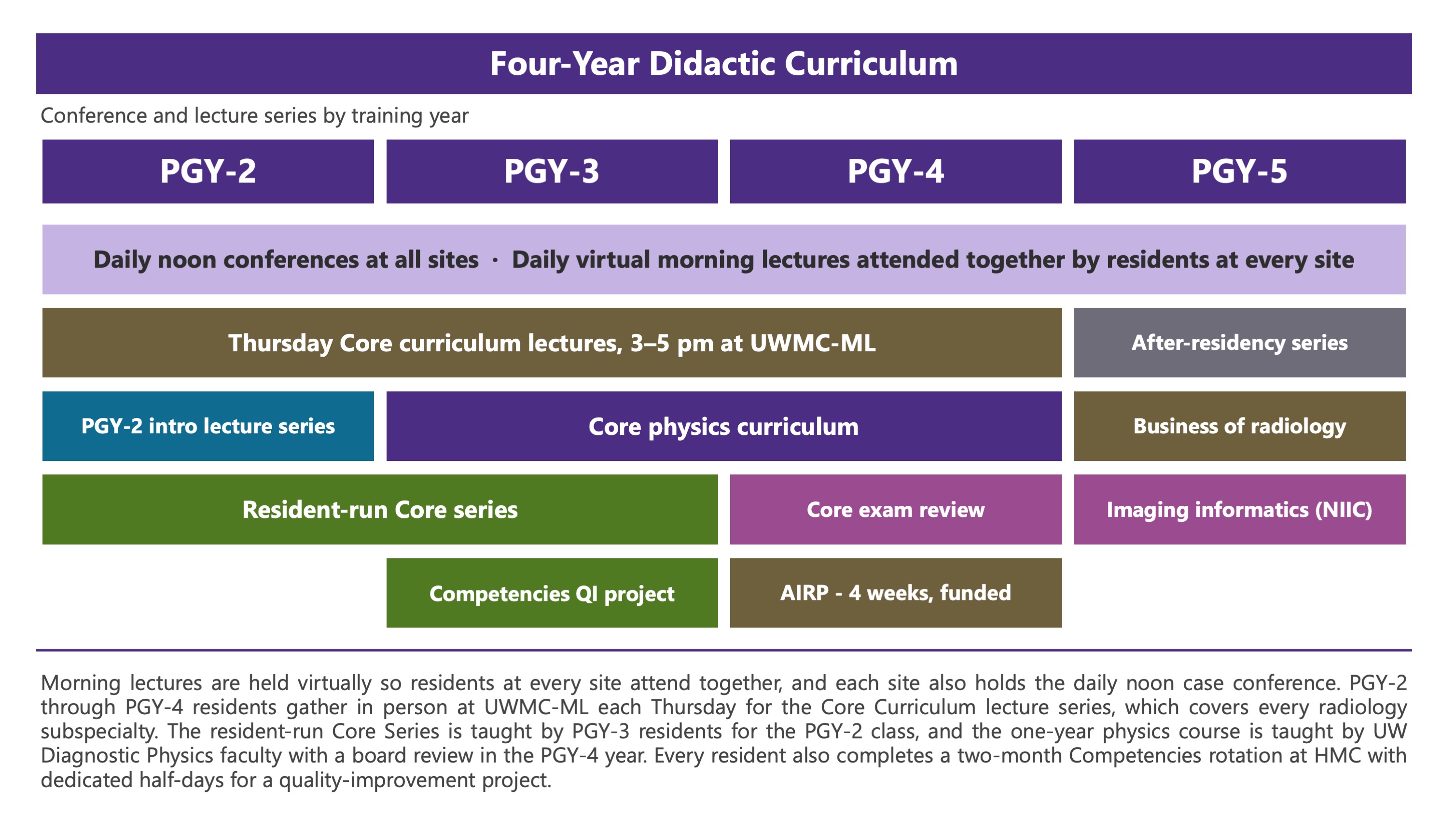
We have a sound foundation of didactic and case-based teaching conferences. There are daily noon conferences at all sites, plus daily virtual morning lectures that residents at every site attend together.
A series of core curriculum lectures are held at UWMC-ML every Thursday from 3:00pm - 5:00pm. PGY-2 through PGY-4 residents gather at UWMC-ML for in-person interactive teaching sessions each week. This curriculum covers all subspecialties in radiology.
PGY-2 residents also receive a special introductory course at the beginning of the year, with daily morning lectures. Representative lecture topics include normal anatomy, interpretative approach, dictating an effective radiology report, as well as hands-on sessions at the PACS workstation.
Additionally, our conference curriculum includes a resident-led “Core Series,” which takes place at noon once a week. These lectures are taught by PGY-3 residents and geared toward PGY-2 residents.
Our curriculum also features a comprehensive one-year physics course, taught by the UW Diagnostic Physics faculty. The physics course features topics spanning all of the modalities in radiology as well as radiation safety and biology. Faculty also give a physics board review course during the PGY-4 year in preparation for the Core examination.
Our PGY-5 residents may opt into the ACR Radiology Leadership Institute Milestone course, which covers the Business of Radiology and Healthcare Economics. The National Imaging Informatics Course (NIIC), covering the fundamentals of imaging informatics, is also available.
Funding (full coverage of course tuition) is provided for all residents to attend the four-week ACR Institute for Radiologic Pathology (AIRP) course.
The PGY-5 class participates in a separate lecture series dedicated to “real world” radiology practice (job applications, contract negotiation, private vs. academic practice, reimbursement models, etc.).
In addition to standard didactics and conferences, residents also have the opportunity to participate in multi-disciplinary conferences such as tumor boards. Various tumor boards are held daily at FHCC, which our senior residents attend twice a week during their FHCC rotation.
Typical Day
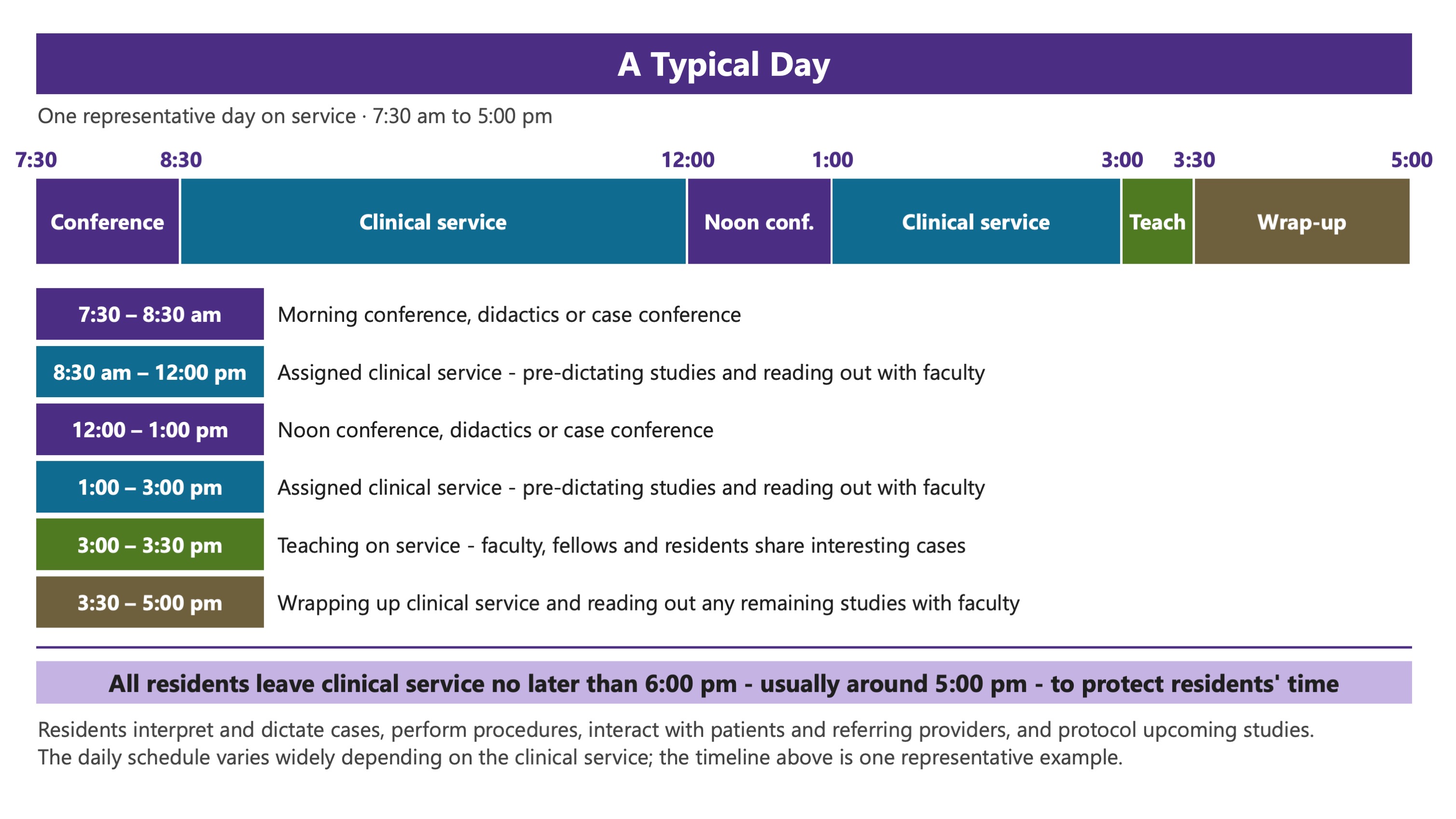
Residents are busy during the workday, interpreting and dictating cases, performing procedures, interacting with patients and referring providers, protocoling upcoming studies, and more. The typical daily schedule varies widely depending on the clinical service, with a sample schedule below:
- 7:30am - 8:30am: Morning conference, didactics or case conference
- 8:30am - 12:00pm: Assigned clinical service. Alternate between pre-dictating studies and reading out with faculty.
- 12:00pm - 1:00pm: Noon conference, didactics or case conference
- 1:00pm - 3:00pm: Assigned clinical service. Alternate between pre-dictating studies and reading out with faculty.
- 3:00pm - 3:30pm: Teaching on service with faculty, fellows, and residents sharing interesting cases.
- 3:30pm - 5:00pm: Wrapping up clinical service. Read out any remaining studies with faculty.
All residents are expected to leave clinical service no later than 6:00pm (usually around 5:00pm on most services) in order to protect residents’ time.