In addition to strong clinical training, our program has numerous educational opportunities, ranging from research to global health. Although not required, many residents choose to take advantage of these opportunities. While many research projects are started organically during clinical work, there is also an Annual Research Showcase to highlight opportunities.
Research Opportunities
The University of Washington offers abundant research opportunities, and our program proudly supports all residents who wish to pursue research. Residents seeking a more structured experience may also apply to the Radiology Residency Research Track, described below.
We offer a research rotation elective, which provides half days dedicated to research. The other half of the day will be on clinical service, generally in the same area as the research project. To apply for this rotation, residents must submit a brief application regarding their proposed project. Residents are eligible for one research rotation per academic year. Residents who have completed research electives will present at the annual Spring Research Day, and many residents also present posters and talks at national conferences, including RSNA, ARRS, AAR, and SIR.
Residents are given 10 professional days each year, which may be used to attend conferences. They do not have to present to use this time. First author presenters will be awarded a $3,000 stipend for travel expenses from the Rohrmann Endowment.
There are ongoing artificial intelligence (AI) projects in conjunction with the Deep Learning Pathway and opportunities for Global Health projects with the global health elective. In addition, resident quality improvement and quality assurance projects completed during the second or third year of radiology residency (PGY-3 or PGY-4) may lead to publishable research.
Global Health Opportunities
Global health rotations during the PGY-5 year are offered across the world, with flexibility to arrange individualized rotations. These rotations allow residents to learn how radiology is practiced around the world, while also helping to share our knowledge and improve patient care.
Our established site is a county hospital in Naivasha, Kenya, and the program supports residents who wish to arrange rotations elsewhere. Residents teach local clinicians, scan alongside regional radiologists, and return to present their experience to the department. Travel is supported by the Rohrmann Endowment. Read reflections from one of our residents below:
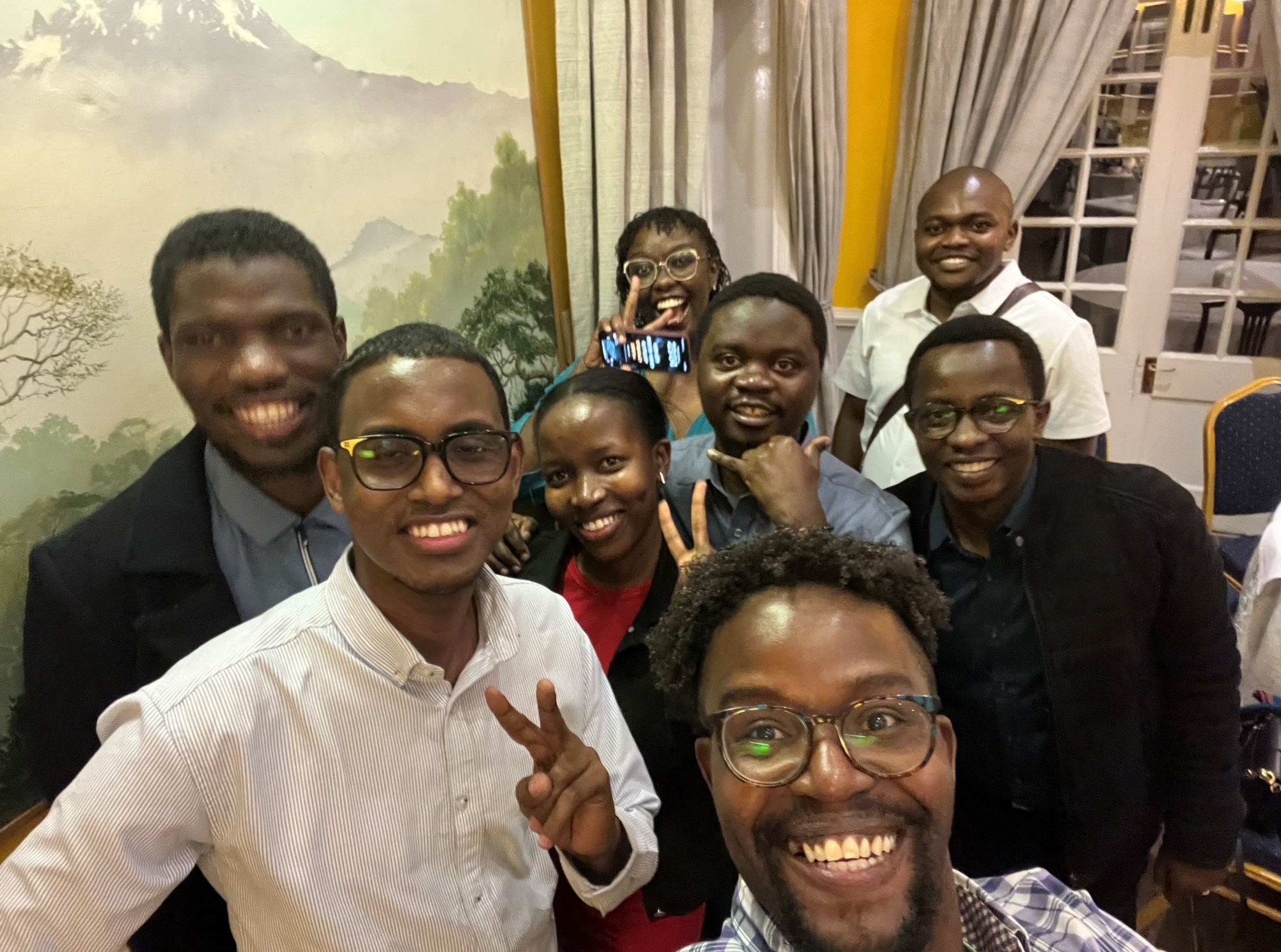
“I spent three weeks at Aga Khan University Hospital in Nairobi, Kenya, as part of a global health elective focused on radiology education and clinical collaboration. Working alongside Kenyan radiologists and trainees exposed me to different disease presentations, healthcare delivery models, and approaches to medical education. While many of the challenges and goals were familiar, the experience broadened my perspective on how high-quality radiology care is delivered in different settings and reinforced the importance of adaptability, curiosity, and lifelong learning. Some of the most memorable lessons occurred outside the reading room. Through community events, cultural experiences, and exploration of Kenya's history, geography, and local communities, I gained a deeper appreciation for the social and cultural contexts that shape health and healthcare. These experiences reminded me that being an effective physician requires not only clinical expertise but also cultural humility and a willingness to learn from others. The relationships I built with colleagues and trainees in Nairobi made the elective especially meaningful, and I hope it serves as the foundation for future collaboration between our institutions.” – by Adlai Grayson, MD, class of 2026
Volunteer Work Opportunities
Residents are invited to participate in semi-annual volunteer activities. These are organized by a committee of residents, with prior activities including helping serve at a local soup kitchen, removing invasive plants at local parks, participating in the walk for lupus, and more.
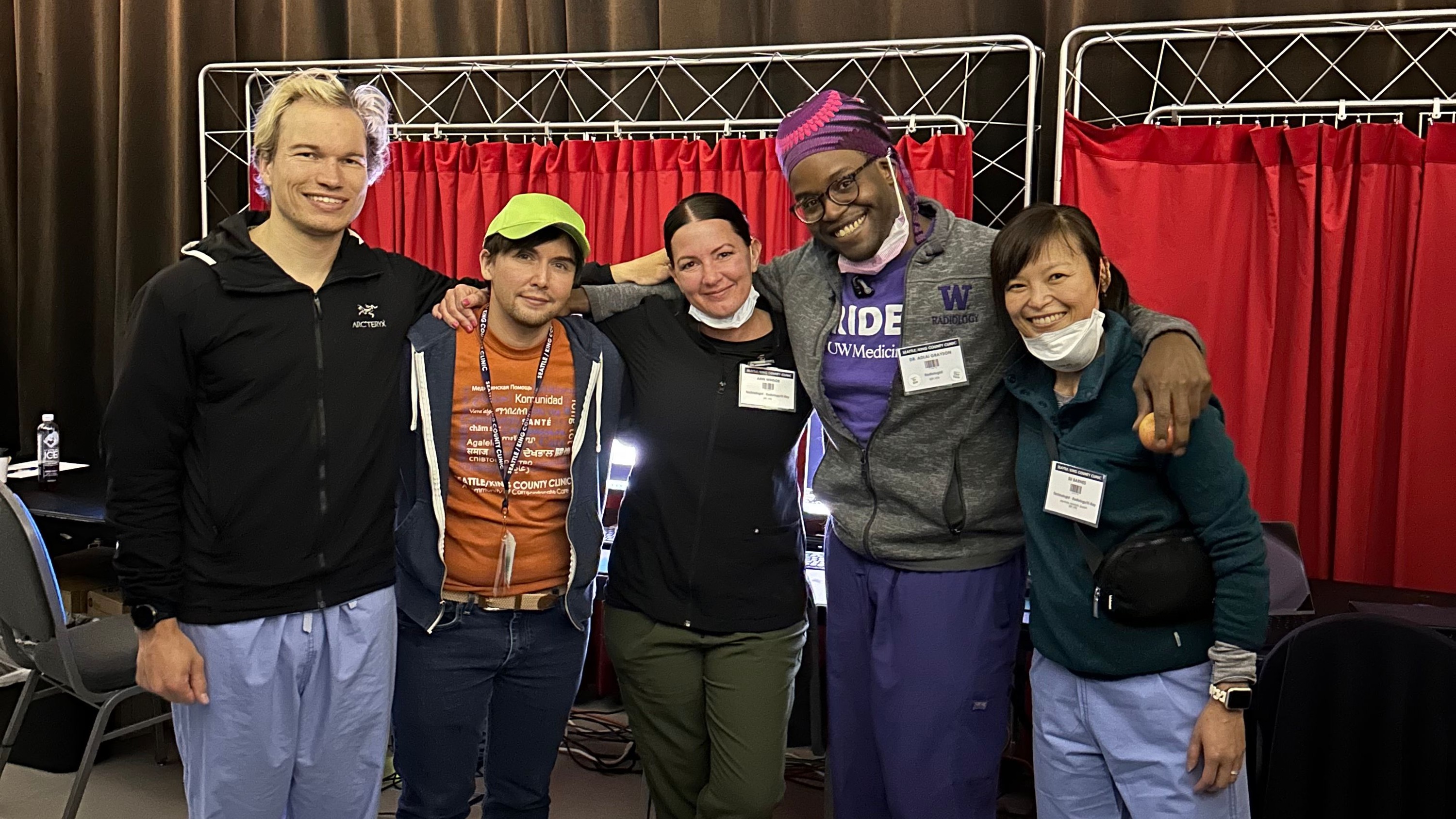
In addition to these resident-organized events, we also have the unique opportunity to volunteer annually at the Seattle King County Clinic (SKCC). The SKCC is a completely free clinic held in one of Seattle’s largest stadiums. This provides vulnerable patient populations with a wide range of healthcare services, ranging from primary care to mental health and dentistry. The clinic is a meaningful way to give back to our community, and we are proud that it was founded by UW radiologists – Dr. Angelisa Paladin, former Vice Chair of Education and now Professor Emeritus, and Dr. Norman J. Beauchamp Jr., former UW Chair of Radiology and now Executive Vice President for Health Sciences and Executive Dean of the School of Medicine at Georgetown University Medical Center.
Radiology Residency Research Track
The UW Radiology Residency Research Track is a joint diagnostic and interventional radiology track to provide additional structure, mentorship, and support for residents who are interested in developing a meaningful research portfolio and exploring careers in academic radiology. The goal is to help participants establish productive mentorship relationships, develop longitudinal research projects, and work toward tangible scholarly outcomes during residency.
Residents in the track participate in quarterly research dinners, a research retreat, and quarterly meetings with research mentors to identify appropriate projects, connect with additional mentors, establish individualized research goals and timelines, and pursue opportunities.
More broadly, this track is intended to create a community of residents interested in scholarship and to provide a clearer pathway for residents considering academic careers.
Early Specialization in Interventional Radiology (ESIR) Pathway
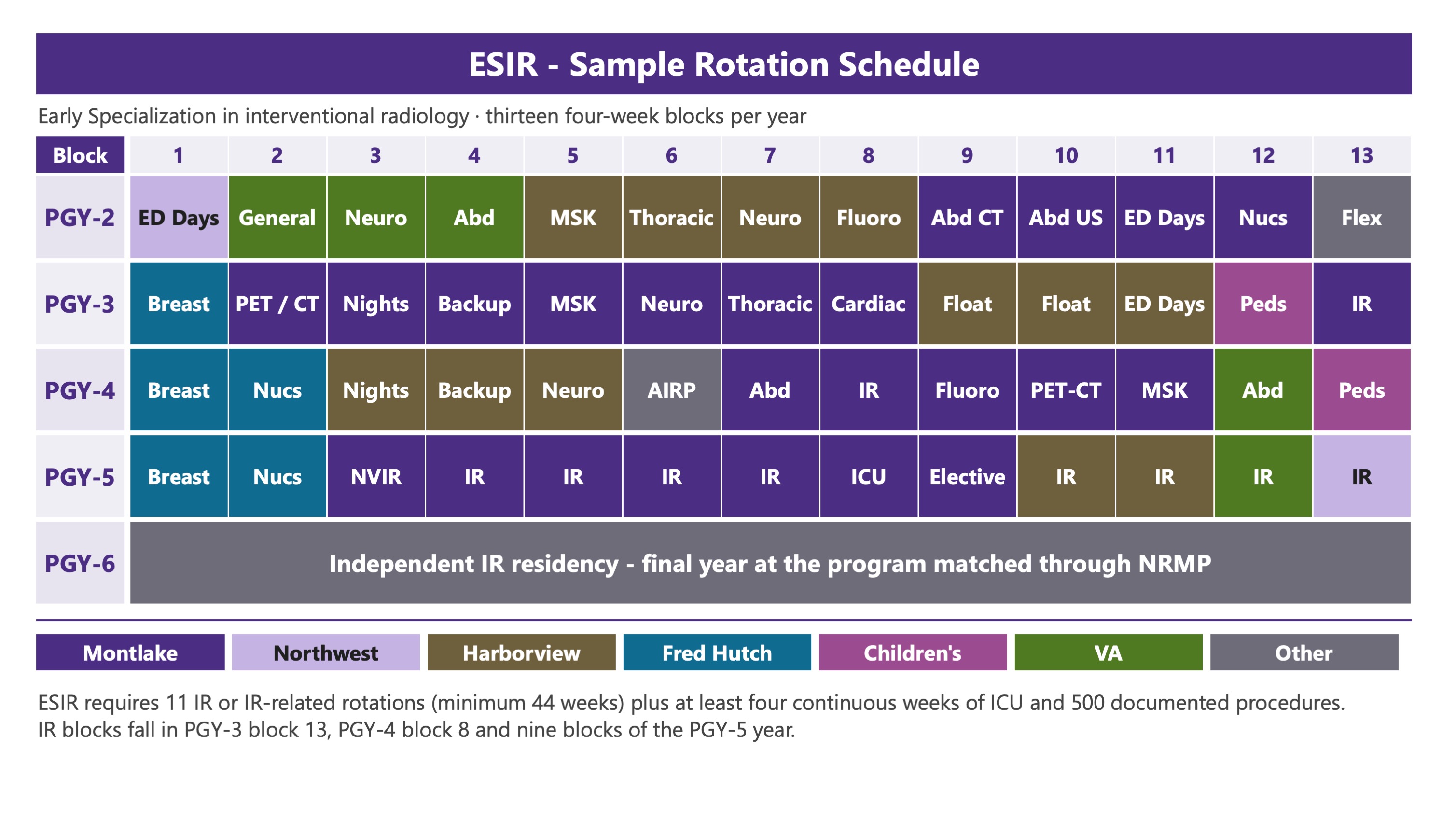
The purpose of the ESIR program is to provide an alternative pathway for diagnostic radiology (DR) residents who identify an early desire to enter interventional radiology (IR). ESIR is a modification of the curriculum of the DR residency and is another option for IR training for some residents.
ESIR training requires a total of 11 interventional radiology or interventional radiology-related rotations (minimum of 44 weeks), and an intensive care unit (ICU) rotation of at least four continuous weeks within the four-year diagnostic radiology residency, with documentation of 500 IR or IR-related procedures. This allows a DR resident to enter the second year of an IR independent residency as a PGY-6 and complete the final year of training.
The UW diagnostic radiology residency program offers ESIR in conjunction with the interventional radiology residency program. Two positions are available for the PGY-4 class each year. The PGY-5 ESIR residents will join the group of seven senior IR residents in their PGY-5 and higher years (integrated and independent). The selection committee includes the diagnostic radiology residency and interventional radiology residency program directors and associate program directors. Interested residents will submit their application during their PGY-4 year, with the committee making its decision before the next academic year. ESIR residents will apply for independent IR residency programs through the ERAS/NRMP match and can apply to their home institution as well as other programs.
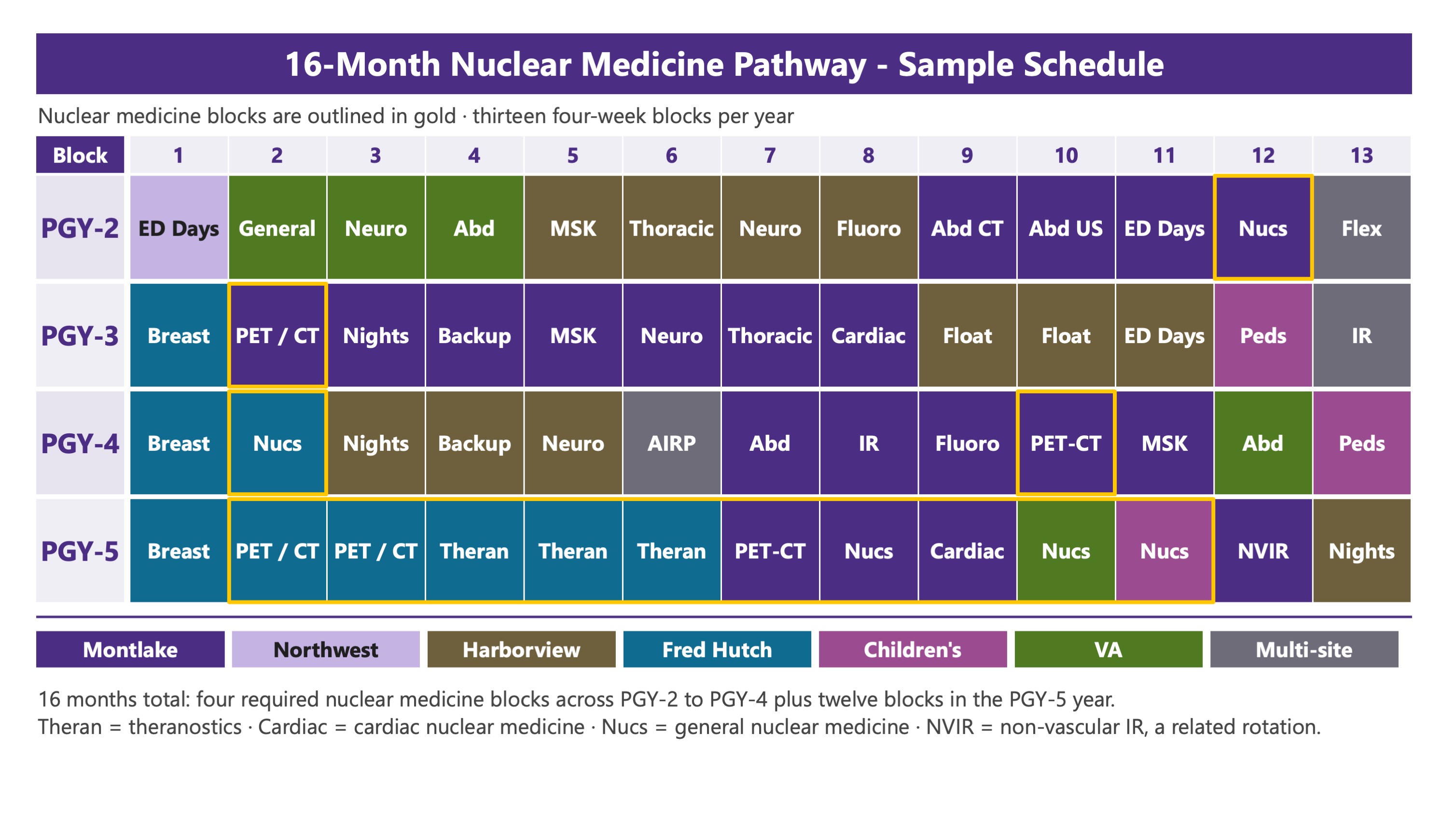
Nuclear Radiology 16-Month Pathway
Residents who develop an early interest in nuclear radiology may pursue the American Board of Radiology's 16-month pathway to specialty certification in diagnostic radiology and subspecialty certification in nuclear radiology. It establishes eligibility for the nuclear radiology subspecialty certificate without a separate fellowship year. In our program, two positions are available each year. With the revised timing of the American Board of Radiology examinations, this pathway may be supported on a case-by-case basis.
The pathway requires 16 months of nuclear radiology, nuclear medicine, molecular imaging, radiotheranostics, or radiopharmaceutical therapy during residency. Training includes integrated SPECT/CT and PET/CT experience, pediatric cases, and the NRC requirements for radiopharmaceutical therapy. Interested residents should raise the pathway with the program director early in training and the ABR application, signed by the program director and the nuclear radiology preceptor, is due at least six months before graduation.
Pediatric Radiology 15-Month Pathway
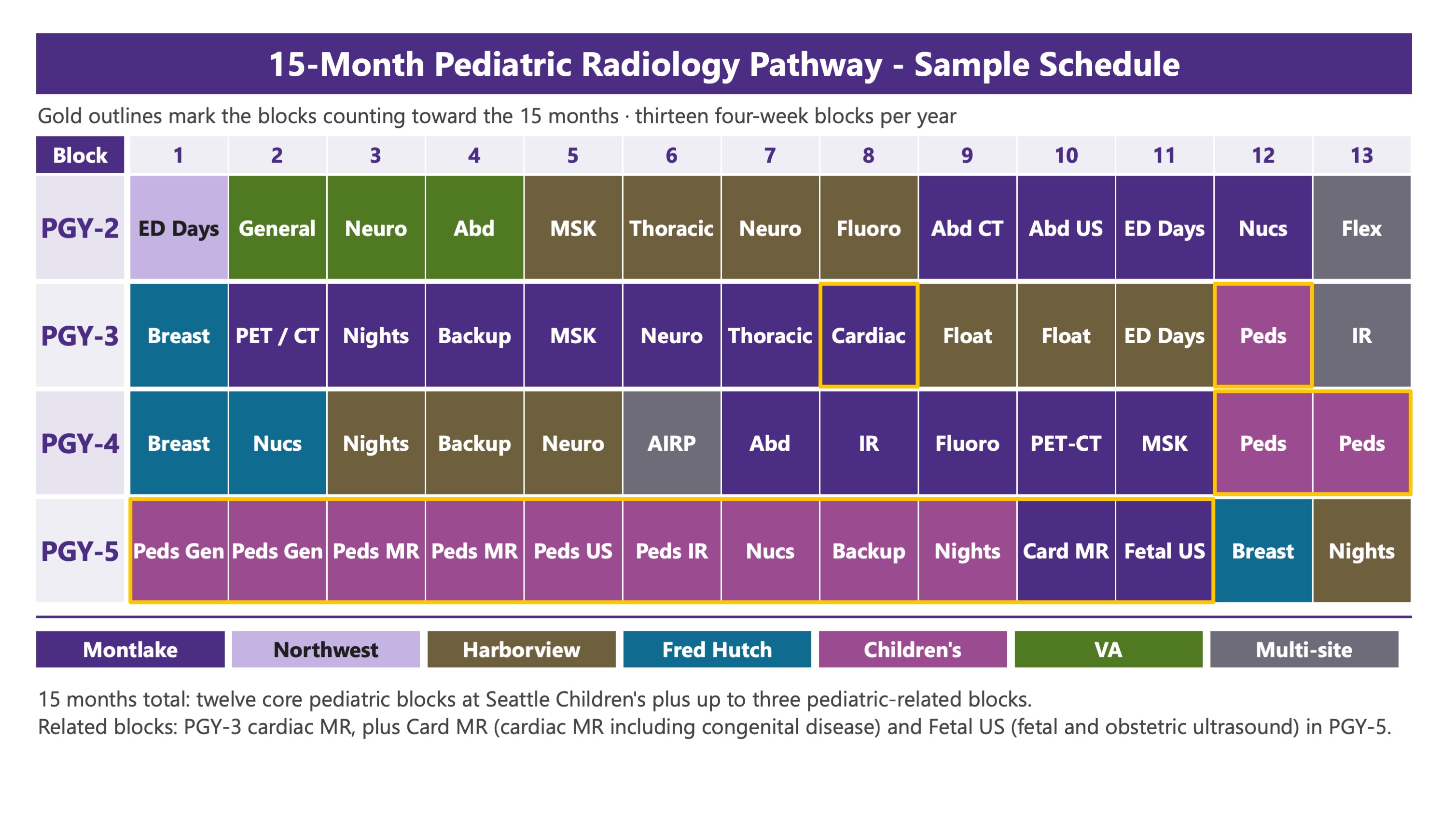
Residents drawn to pediatric imaging may pursue the American Board of Radiology's 15-month pathway to specialty certification in diagnostic radiology and subspecialty certification in pediatric radiology, created with the Society for Pediatric Radiology. Completing the pathway during residency establishes eligibility for the pediatric radiology subspecialty examination without a separate fellowship year, and residents remain free to pursue a fellowship in another subspecialty afterward. In our program, two positions are available each year. With the revised timing of the American Board of Radiology examinations, this pathway may be supported on a case-by-case basis.
The pathway requires 15 months of pediatric training during residency, 12 core pediatric rotations, averaging more than 80 percent pediatric cases, plus up to three pediatric radiology-related rotations, completed at Seattle Children's Hospital. Interested residents should notify the program director and the pediatric radiology fellowship program director at least 18 months before graduation with the application is due to the ABR at least six months before residency completion.